


23 Oct Starting a Business in London, Ontario? 6 Resources for Advice, Funding and Mentorship (2026)
When I first started exploring entrepreneurship, I was a somewhat shy and insecure college student who thought I needed to figure everything out myself.
Looking back, I wish I’d asked for help sooner.
I’ve been running LOWD Media since 2009, and some of the most valuable support I’ve received came from organizations I might never have discovered without asking a few questions. One helped me improve my business plan and introduced me to a program that eventually provided $15,000 in financing and a business mentor.
Whether you’re exploring your first business idea or looking for help growing an existing company, here are six resources worth knowing about in London, Ontario, and the surrounding communities.
Not Sure Where to Start? Here’s a Quick Guide.
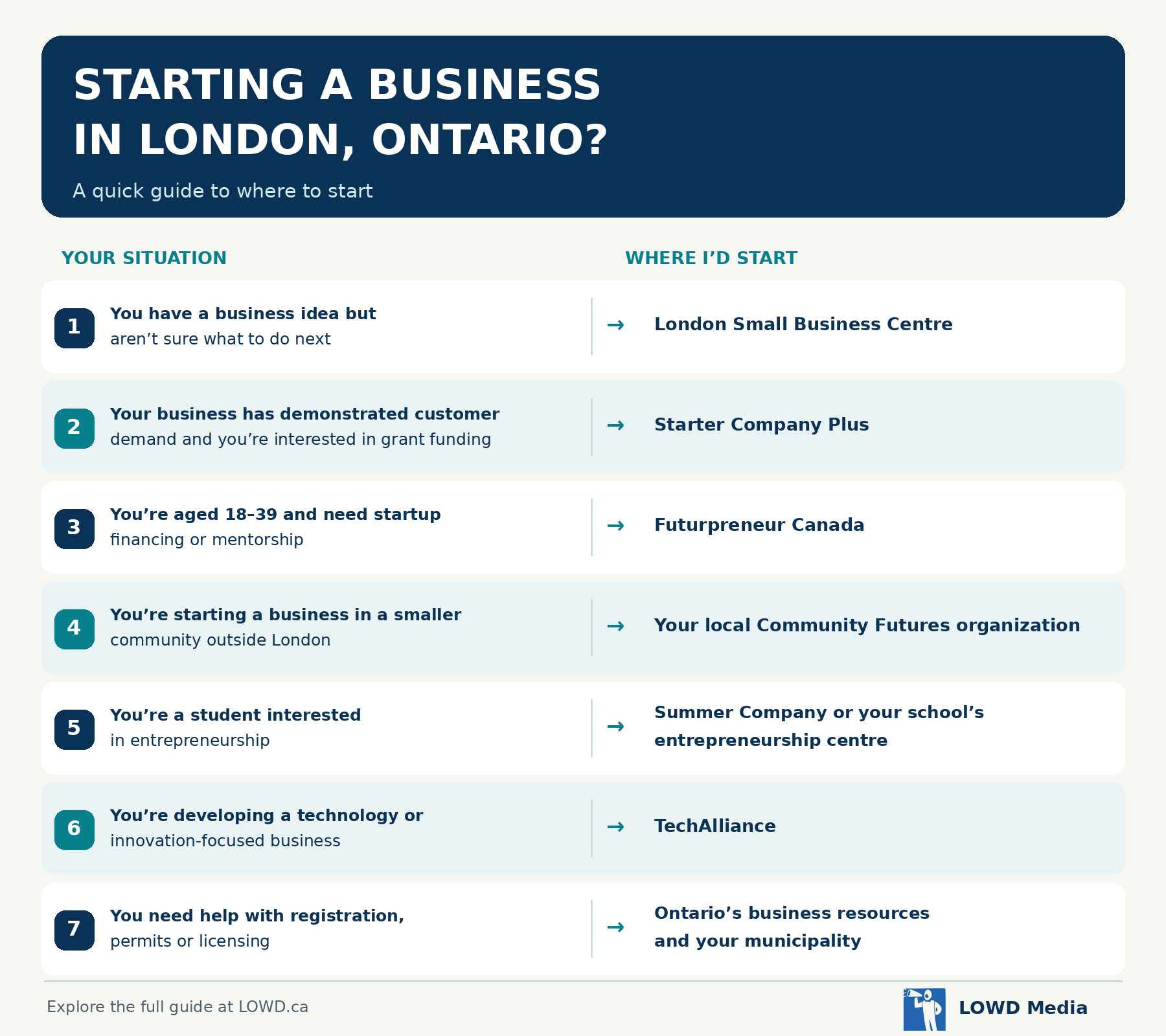
Quick guide to business advice, funding and mentorship resources in London, Ontario. Created by LOWD Media.
For most people starting a small business in London, I’d begin with the Small Business Centre. Even if it isn’t the right organization for your particular situation, it may be able to point you in the right direction.
1. London Small Business Centre: Advice, Training and Funding Programs
Best for: People exploring a business idea, preparing to launch or growing a small business.
The London Small Business Centre offers business consultations, workshops, planning assistance and information about funding opportunities.
I visited the Centre years ago for help improving my business plan. The advice was useful, but an introduction they made to another organization turned out to be even more valuable.
You don’t necessarily need a finished business plan before contacting them. Sometimes an early conversation can help you figure out what to work on next.
Starter Company Plus
This Ontario government program, delivered locally through the Small Business Centre, combines training and mentorship with an opportunity to receive a grant of up to $5,000.
It’s competitive and intended for entrepreneurs who have already demonstrated customer demand or early revenue, rather than those still deciding what business to start.
London’s program requirements include HST registration, at least $2,500 in cash toward matching funds, a commitment averaging approximately 35 hours per week to the business, and participation in a mandatory introductory workshop. Students aren’t eligible.
The Centre has identified spring 2027 as its next intake. Check the official page for current application dates and requirements.
Summer Company
Ontario Summer Company program
Summer Company helps eligible high school and post-secondary students aged 15–29 start and operate a business during the summer before returning to school.
Participants can receive mentorship, training and up to $3,000 in funding.
I wish I’d known about opportunities like this when I was younger. Even if a student’s first business doesn’t become a career, learning to find customers, manage money and deliver a product or service can be valuable.
Applications generally take place ahead of the summer business season.
2. Futurpreneur Canada: Startup Financing and Mentorship
Best for: Entrepreneurs aged 18–39 looking for financing and experienced guidance.
Futurpreneur is a national nonprofit supported by the federal government and other funding partners. It was previously known as the Canadian Youth Business Foundation (CYBF).
This is the organization the Small Business Centre introduced me to, and it eventually provided me with $15,000 in financing.
At the time, I didn’t have substantial assets to offer as collateral, and traditional business financing wasn’t necessarily easy to obtain. The loan helped me invest in my business, but the mentorship was just as valuable.
I was matched with a business mentor who became someone I could turn to for perspective. I remember being particularly stressed about one business challenge and reaching out to him. He helped me calm down, think through the situation and decide how to approach it.
It wasn’t a dramatic breakthrough. It was simply having someone with more experience available when I needed advice.
Today, Futurpreneur’s core program offers eligible entrepreneurs aged 18–39 up to $75,000 in financing, including funding from the Business Development Bank of Canada (BDC), along with up to two years of mentorship. Eligibility requirements include Canadian citizenship or permanent residency.
This is a loan, not a grant. Interest applies, and the money must be repaid. The current core program generally provides interest-only payments during the first year before principal repayments begin.
Financing terms have changed over time, so review the current details carefully. And if you’re eligible, don’t overlook the mentorship component.
3. Community Futures: Business Support Outside London’s City Limits
Best for: Entrepreneurs in rural communities and smaller municipalities seeking advice, financing or other support.
Community Futures is a federally supported network of locally governed nonprofit organizations serving rural and smaller communities.
Ontario has 60 Community Futures organizations, each serving a defined geographic area. Their services commonly include business advice, planning assistance, workshops and loans.
One particularly useful feature is that local offices may consider financing applications that don’t fit traditional bank lending requirements. Approval isn’t guaranteed, but it’s another option for entrepreneurs who need capital.
Community Futures Middlesex
Community Futures Middlesex supports eligible businesses throughout Middlesex County. It offers business advice and financing, including small business loans of up to $300,000, subject to approval.
Its service area includes Middlesex County communities, but not the City of London itself.
If you’re starting a business in a nearby community, here’s where to look:
| Community | Organization |
| Komoka, Kilworth, Ilderton, Arva, Dorchester, Thorndale, Lucan, Strathroy | Community Futures Middlesex |
| St. Thomas, Aylmer and other Elgin County communities | Elgin Business Resource Centre |
| Thamesford, Ingersoll and other Oxford County communities | Community Futures Oxford |
Eligibility depends on where your business operates. You can find additional offices through Community Futures Ontario.
Also, don’t assume living outside London excludes you from Small Business Centre programs. Some programs may serve eligible entrepreneurs in surrounding Middlesex County communities.
4. Entrepreneurship Support at Fanshawe College and Western University
Best for: Students and alumni interested in starting a business.
If you’re studying at Fanshawe or Western, investigate the entrepreneurship resources available through your school.
LEAP Junction at Fanshawe College
LEAP Junction helps eligible students and alumni develop business ideas through entrepreneurship programming, advice, workshops and mentorship.
When I was in college, I was working on an online textbook marketplace. I had plenty of ideas but spent a lot of time trying to solve problems independently. Having somewhere to test those ideas and get feedback would have been helpful.
Morrissette Entrepreneurship at Western University
Morrissette Institute for Entrepreneurship
Western’s Morrissette Institute for Entrepreneurship, Powered by Ivey, offers entrepreneurship programs, mentorship and business development opportunities for eligible members of the university community.
Even if you’re only exploring an idea, talking it through with someone experienced can help you spot problems before investing significant time or money.
5. TechAlliance: Support for Technology and Innovation-Focused Businesses
Best for: Technology startups and businesses developing innovative products or services.
TechAlliance of Southwestern Ontario
TechAlliance supports technology and innovation-focused businesses throughout Southwestern Ontario.
It offers business coaching, industry connections, growth programs and guidance on funding opportunities. Some initiatives also target businesses in rural communities surrounding London.
This probably wouldn’t be my first recommendation for someone opening a conventional local service business. But if you’re developing software, creating a new product or bringing an innovative idea to market, it’s worth exploring.
6. Government and Municipal Resources: Registration, Permits and Licensing
Best for: Understanding the requirements of legally starting and operating a business.
City of London: Business and Development
City of London: Business Licences
Starting a business involves more than finding customers and developing a product or service.
Depending on your plans, you may need to register your business, understand tax obligations, obtain licences, check zoning rules or arrange insurance.
Ontario’s business resources provide a starting point for provincial requirements. If you’re operating in London, the City’s business and development information can help with local requirements, while its business licences page explains municipal licensing. BizPaL can help identify permits and licences that may apply.
If you’re in a surrounding community, check with your own municipality rather than assuming London’s rules apply.
Government resources are useful, but professional accounting or legal advice may still be necessary.
Don’t Overlook Networking and Business Relationships
There’s another benefit to getting involved in the local business community that I didn’t appreciate when I was younger: meeting people.
Early in my entrepreneurial journey, networking wasn’t something I particularly enjoyed or understood. I was more interested in working on my business than spending time at events or building professional relationships.
And I’ll admit that networking can sometimes feel like a waste of time.
But over the years, I’ve developed some genuinely valuable relationships through networking. Some have directly resulted in revenue, referrals and opportunities I probably wouldn’t have discovered otherwise.
I wouldn’t suggest attending every event or treating every conversation as a potential sale. But if an organization offers workshops, networking events or opportunities to meet other entrepreneurs, there’s value in considering those opportunities beyond the immediate information being presented.
Futurpreneur and the Elgin Business Resource Centre are two examples of organizations that offer opportunities to connect with other entrepreneurs.
Sometimes the most useful connection you make isn’t the person running the program. It’s another entrepreneur in the room.
What if You’re Over 40 or Don’t Qualify for Student Programs?
Some resources have age or student restrictions, but plenty of business support is available to entrepreneurs at other stages of life.
The Small Business Centre serves entrepreneurs across different age groups. Starter Company Plus and Community Futures may be options for eligible entrepreneurs who don’t qualify for youth-focused programs.
BDC and traditional lenders may also be worth exploring, depending on your financing needs.
If you’re unsure where you fit, explain your circumstances to the Small Business Centre or your local business-support organization. They may know about opportunities you haven’t considered.
Before You Spend Thousands on Business Advice
Starting a business can be overwhelming, especially when you’re making decisions about things you have little experience with.
That can make expensive courses, coaching packages and consulting programs appealing. Some are worthwhile, but I’d investigate the free and affordable support available locally before making a major financial commitment.
I previously wrote about attending a free business seminar that turned into a high-pressure sales pitch. It’s a reminder to be thoughtful about where you invest your money.
You may discover that the guidance or mentorship you need is already available through an organization you hadn’t heard of.
One Final Thought
If I could give my younger entrepreneurial self one piece of advice, it would be to stop trying to figure everything out alone.
You don’t need to know everything about running a business before you start. But recognizing when to ask for help can save you time, money and frustration.
My experiences with the Small Business Centre, Futurpreneur and the relationships I’ve built over the years have reinforced that lesson.
If you’re thinking about starting a business in London or a surrounding community, I’d encourage you to contact at least one of these organizations.
You might be surprised by what’s available.
Have you used any of these resources, or is there another local organization entrepreneurs should know about? I’d be interested to hear about your experience.
Disclosure: LOWD Media has worked with organizations mentioned in this article. Recommendations are based on their relevance to entrepreneurs, not on business relationships.
Last reviewed: October 2026. Program availability, eligibility requirements, funding amounts and application periods can change. Always confirm current details directly with the organization.
No Comments